Efficient operation assessment
Among some stakeholders, a perception existed that UX was a bottleneck, slowing down product delivery. To address this, I undertook an "Efficient Operation Assessment" with the aim of determining if this perception was accurate and to quantify UX team's efficiency.
The process
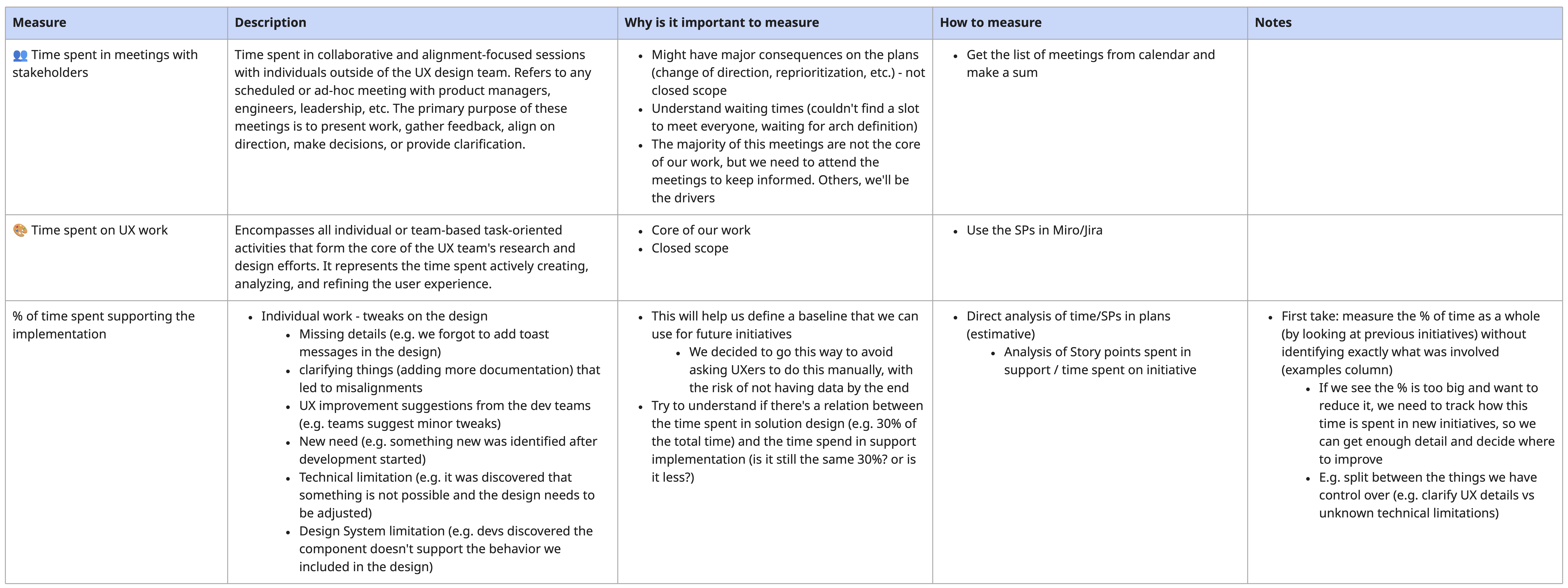
Defining metrics
Established clear metrics for what to measure and why, focusing on simplicity and practicality (e.g. time spent in core UX work, time spent supporting implementation).
Data collection & analysis
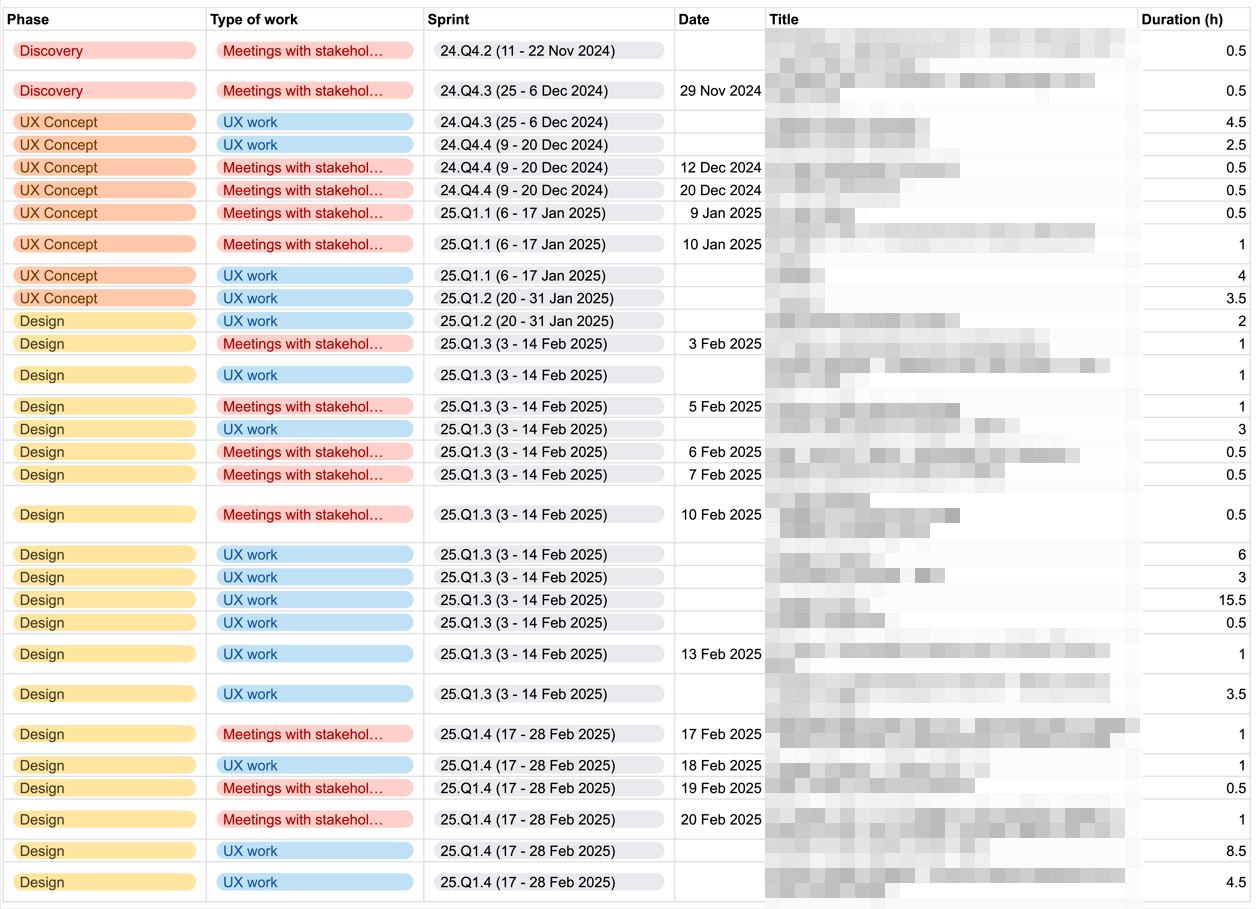
Gathered data from past initiatives within several product areas to understand how time was being invested.
Leveraging AI for insights
AI was utilized to process and analyze the collected data to identify patterns and trends. While initial results were informative but lacked deeper context, further refinement of the AI model with more contextual data helped in understanding the non-linear nature of the UX process

Key outcomes & learnings
- Myth debunked: the analysis revealed that UX was, in fact, not a bottleneck but pointed out to possible initiatives' overall inefficiency. UX was not a factor in extended timelines.
- Understanding efficiency: we defined "UX Leverage" as a key metric (for every hour of UX work, how many days of development work are enabled), to help communicate the value of UX and reframe how stakeholders view the UX teams.
- Limitations & next steps: the assessment had limitations, including reliance on estimations, a small sample size, and potential bias from single-person initiatives. Future steps include collecting more automated data, evolving classification guidelines, and considering additional factors like technical and UX complexity, as well as different allocation models.
Enhancing efficiency
In parallel with the efficiency assessment, I worked on defining a more pragmatic operating model for the UX design phases within my product area. This involved understanding current practices and identifying areas for improvement.
The operating model
Prioritization framework
A prioritization matrix was crafted, classifying initiatives based on "Value" and "UX Effort" to guide resource allocation and planning.
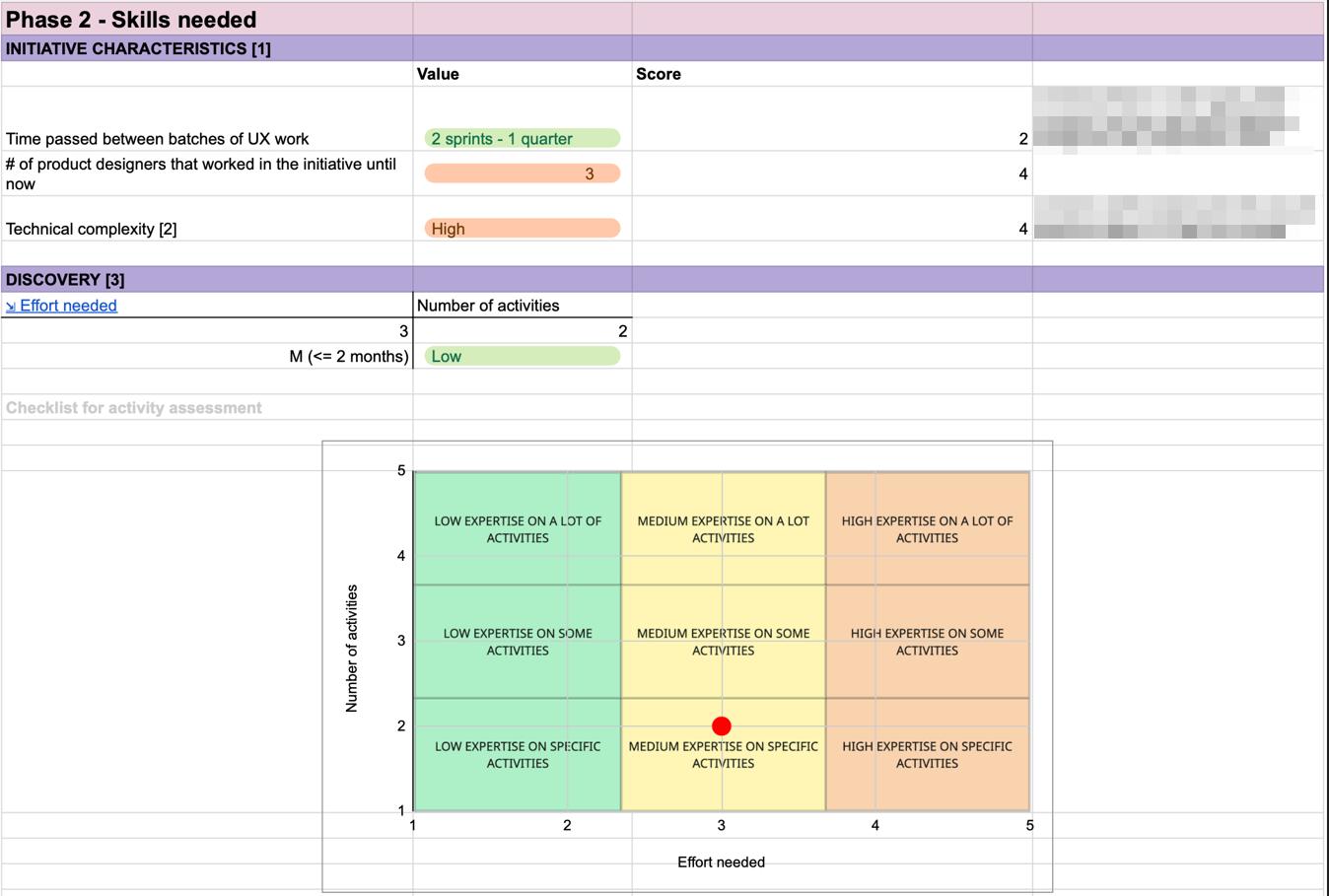
Skills needed
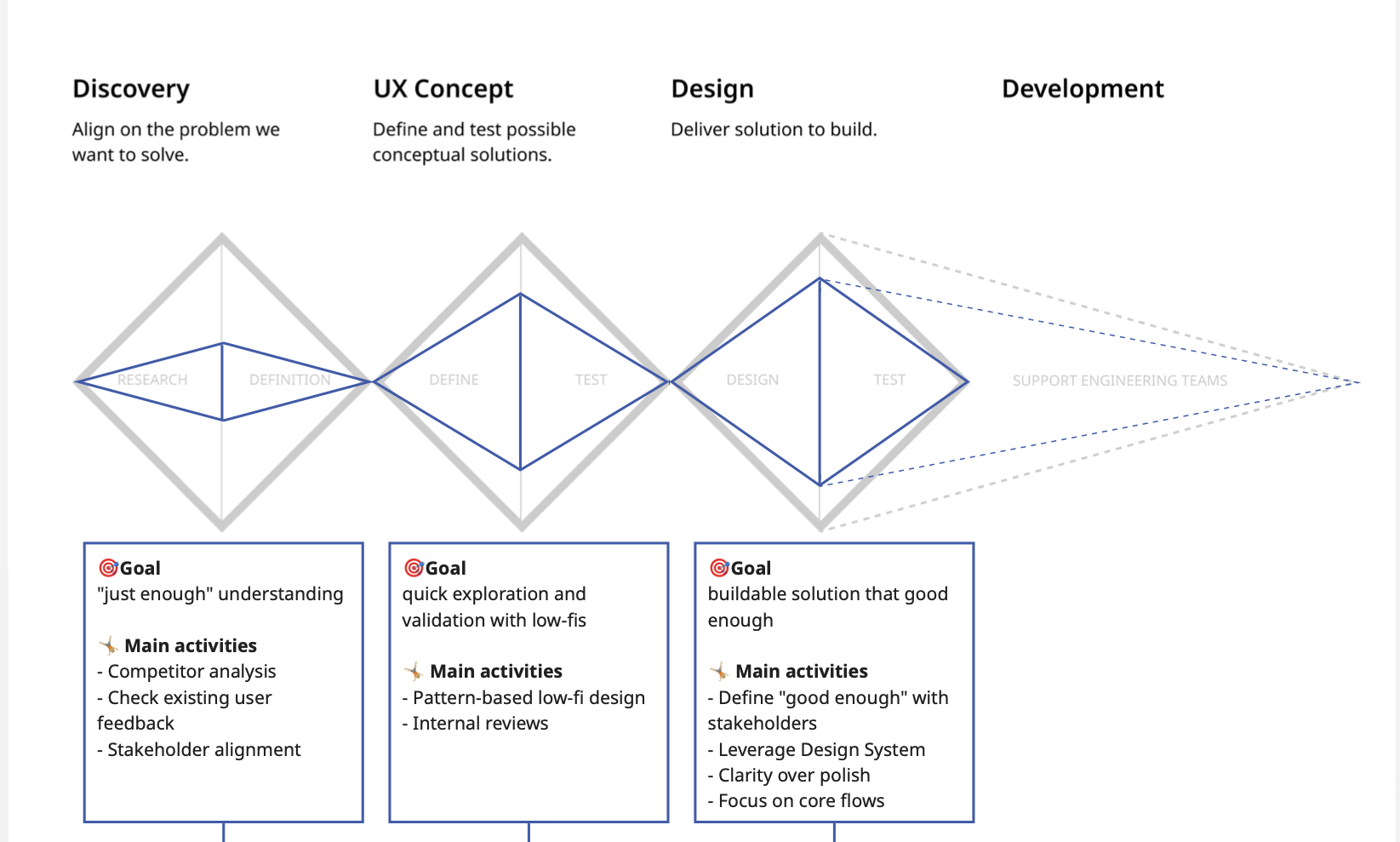
Assessing the effort needed and number of activities within each phase (Discovery, UX Concept, Design, Development) to identify required expertise levels (low, medium, high expertise on specific, some, or a lot of activities).
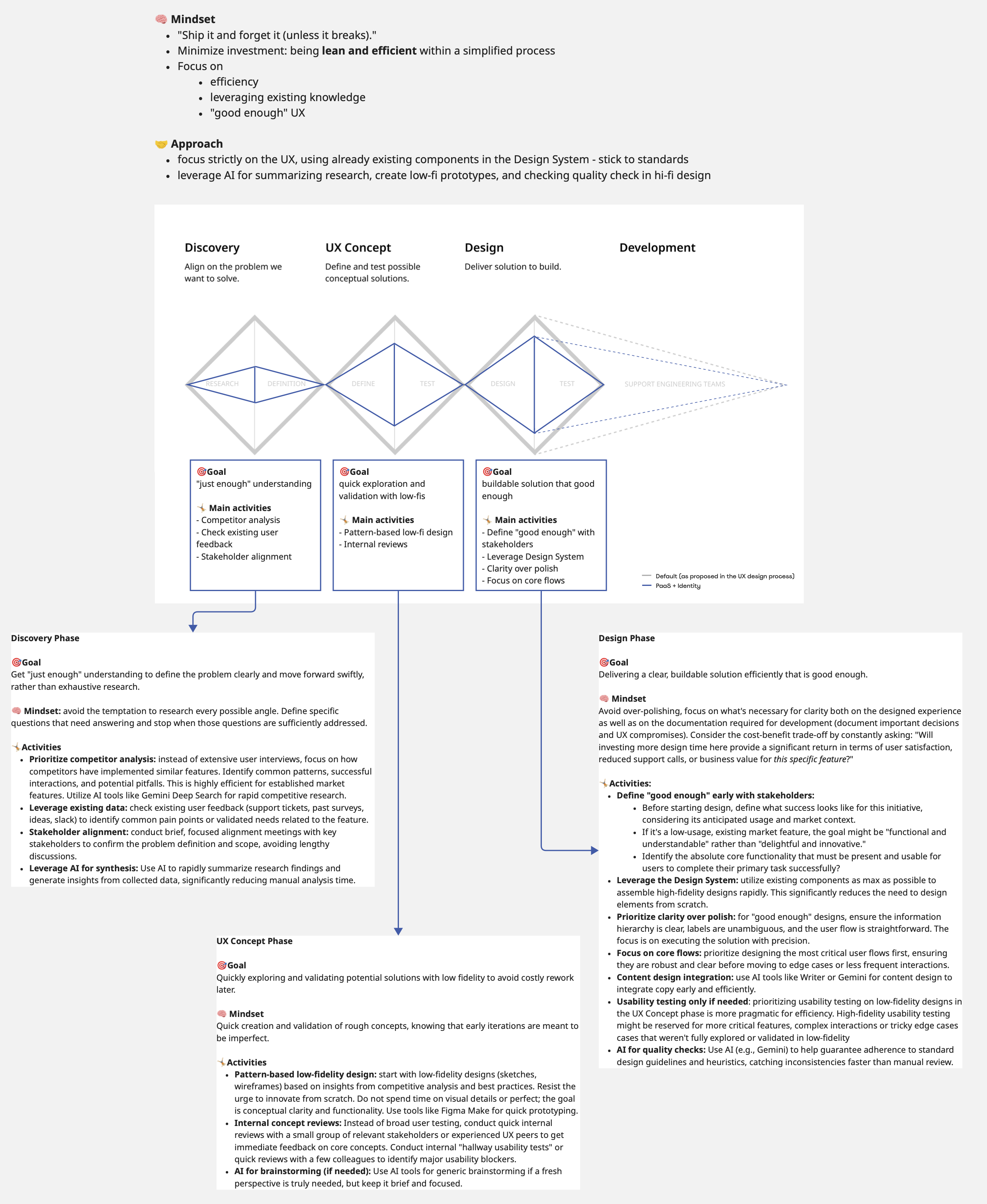
UX approach
Provide a set of guidelines for the mindset and UX approach to follow on each priority quadrant, complemented by examples of previous initiatives that fit the same quadrant.